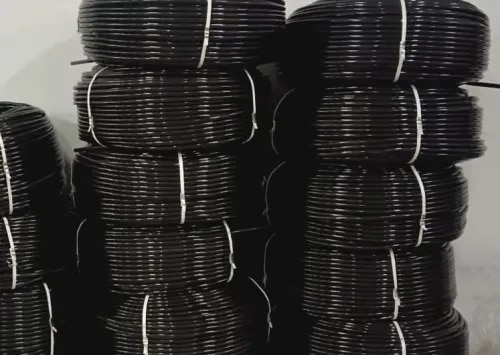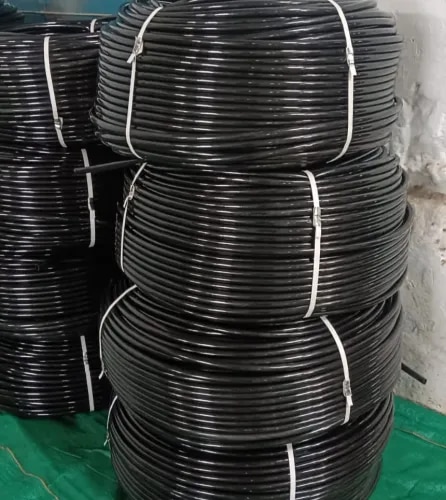
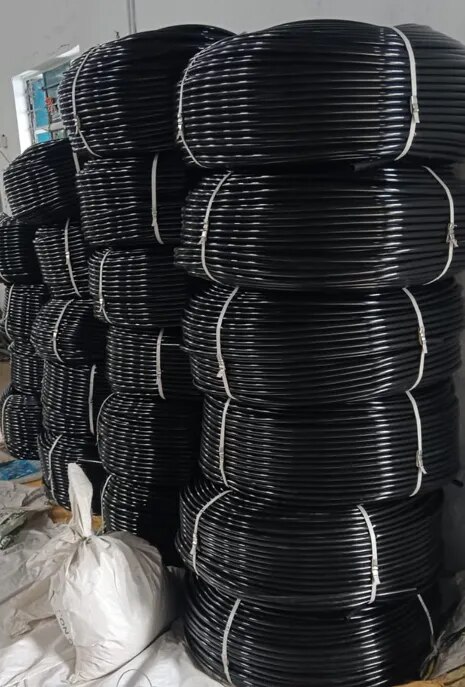
LLDPE Plain Hose Pipe (20mm)
Description
Available in Class 1 & Class 2, made of high grade 100% virgin polyethylene conforming to Indian standard IS:12786. Resistant to chemicals and fertilizer used in agriculture. It is used as lateral pipe in various micro irrigation systems such as Drip, Micro Sprinkler, Micro Sprayer, Jets, Foggers etc...
Sizes: 12 mm, 16 mm & 20 mm
LLDPE Plain Hose Pipes (20 mm) are high-capacity flexible lateral conduits engineered for large-scale micro-irrigation systems, agricultural fields with long run lengths, and high-flow emission devices.
Core Specifications & Standards
Size & Dimensions: Nominal outer diameter of 20 mm, representing the upper capacity threshold for micro-irrigation lateral piping.
Material & Quality: Manufactured from 100% virgin Linear Low-Density Polyethylene (LLDPE) complying with Indian standard IS:12786. Offered in Class 1 and Class 2 pressure ratings.
UV & Weather Stabilization: Formulated with carbon black and UV additives to endure direct, prolonged sunlight exposure and thermal expansion without cracking or degrading.
Agrochemical Resistance: Fully resistant to fertilizers, pesticides, and soil chemicals commonly injected during fertigation.
Primary Applications
Long-Run Drip Lateral Systems: Ideal for extensive crop rows where smaller 12 mm or 16 mm pipes would experience too much pressure drop over long distances.
High-Flow Micro-Sprinklers & Jet Networks: Supplies higher water volume required for mini-sprinklers, spray jets, misting systems, and foggers in orchards and greenhouses.
Commercial Agriculture & Estates: Widely used in sugarcane, banana, tea/coffee plantations, fruit orchards, and large-scale turf management.
Key Advantages
Reduced Friction Loss: The larger 20 mm inner diameter minimizes internal friction, maintaining consistent flow and uniform pressure over longer lateral distances.
Higher Discharge Capacity: Accommodates a greater number of emitters or higher-flow drippers per line compared to 12 mm and 16 mm options.
Durability & ESCR: Features high Environmental Stress Crack Resistance (ESCR) to handle mechanical stresses, dragging across rough terrain, and varying soil loads.